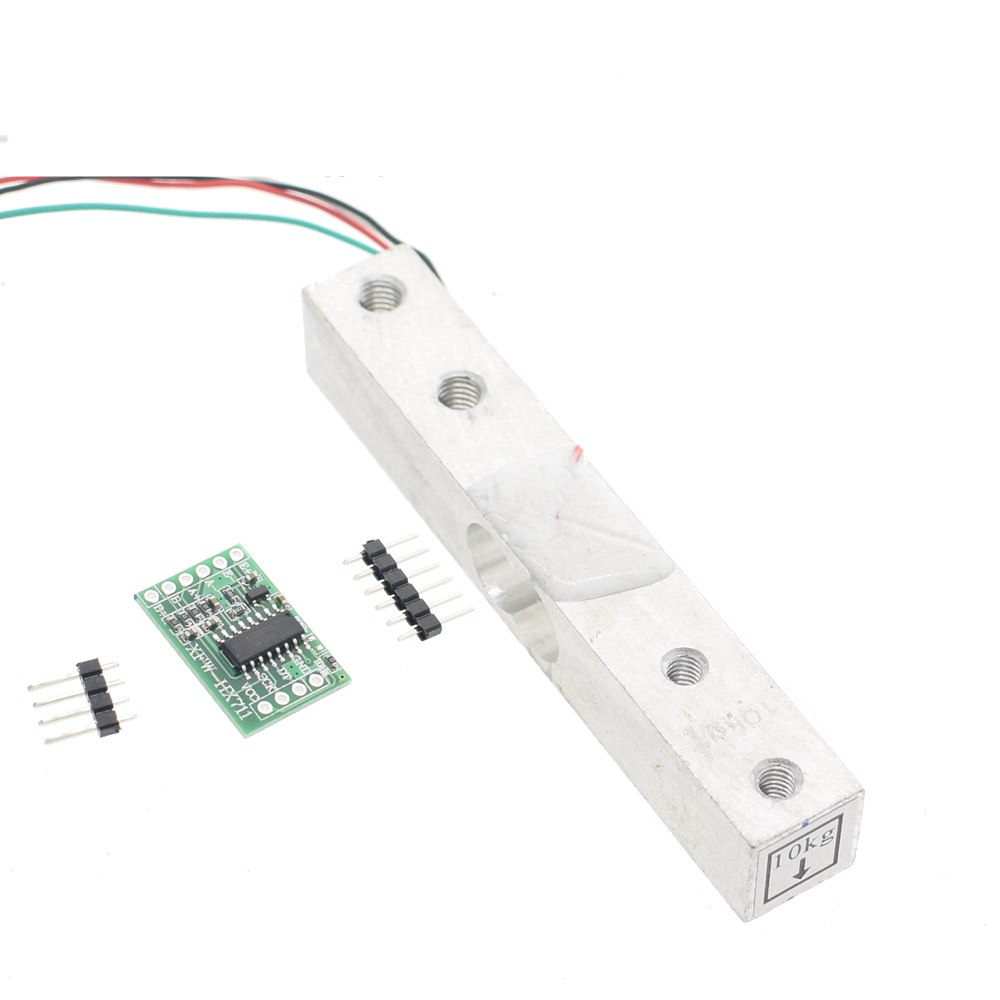
Digital Load Cell Weight Sensor 1KG 5KG 10KG 20KG Portable Electronic Circuit Diagram A load cell is an application of strain measurements relating to weight measurement. A load is applied to a strain gauge, which causes the gauge to strain a certain amount and output a voltage proportional to the applied load. This relationship between strain and voltage is used in many applications where weight measurement is important.
OVERVIEWWe've all used a scale to determine the weight of something at some point in our lives.Using a Load Cell or Weight sensor you can add this capability to your Arduino projects.In this tutorial we will see how to connect, calibrate and display the weight on a small OLED display, and by using a rotary encoder we will be able to change the units from: grams, kg or pounds.We will be using

Arduino with Load Cell and HX711 Amplifier (Digital Scale) Circuit Diagram
In this project, we design a portable, precise, and self-contained weighing system using an HX711 load cell, Arduino Nano, OLED display, DS18B20 temperature sensor, battery voltage amplifier, on/off switch, calibration, and tare buttons. Project Features. Precise Weight Measurement: High accuracy measurement with HX711 ADC module.

This change is proportional to the force exerted, allowing for accurate weight measurement. Proper Installation of Load Cells. Correct installation is vital for obtaining accurate measurements from load cells. Here is a step-by-step guide for you to follow. Mount Securely: Ensure the load cell is firmly mounted to a stable structure.

Digital Weighing Scale Using Load Cell and Arduino Circuit Diagram
Check the arrow on the load cell. It tells us the direction that we need to apply force. You can assemble the load cell as shown in the figure above using metal strips. Just attach the metal strip on the load cell using bolts. Or you can simply attach bottle caps with bolts by making a hole in the bottle caps as I did in the image below.
